


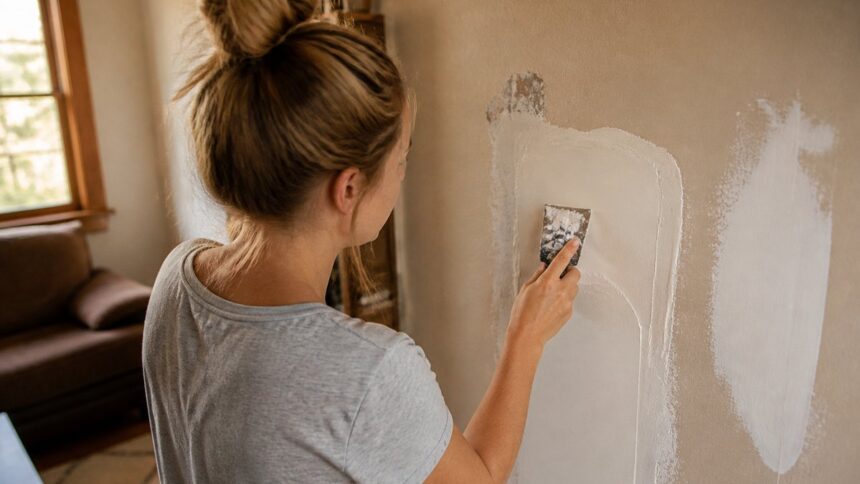
Wall damage, such as cracks and holes, affects the appearance of interior spaces. Proper drywall repair involves more than covering visible damage, as the finished area needs to blend with its surroundings. The condition of the existing material also influences how repairs progress and how paint adheres. Here are a few efficient practices for painting and finishing drywall repairs:
Prepare Damaged Surfaces
Before repairing a wall, the damaged area needs a proper assessment; this helps reveal whether damage extends beyond the visible surface. Several preparation practices help create a suitable working area:
- Identify damaged sections: Locate holes, cracks, dents, nail pops, and areas affected by moisture.
- Check drywall materials: Distinguish standard gypsum board from moisture-resistant green board and fire-rated drywall.
- Protect nearby surfaces: Cover floors and furniture before removing damaged material.
- Remove compromised panels: Replace sections when the existing drywall no longer provides a suitable repair surface.
Repair Drywall Sections
Once loose or broken material is removed, the patching procedure begins. Some small holes are fixed using patching methods and techniques, but larger damaged areas might require partial panel replacement. The method of repair depends on the nature and extent of the damage. Proper preparation of the area allows the patched materials to fit into the available space.
Joint compound serves a key function during the patching process; it helps reinforce cracks. Taping covers drywall seams after mudding fills the joint areas. All layers of the material should be dried properly prior to the application of the next layer. When it comes to water damage, extra attention should be given to the replacement of the panel. Drywall should be checked for soft spots before covering it with a new panel.
Match Existing Textures
Texture matching helps repaired sections blend with the original wall or ceiling. A smooth patch against a textured surface remains noticeable, even after painting. The surrounding finish guides the repair technique, and lighting helps reveal differences across the surface. Matching the original appearance requires attention to the transition between old and new material during drywall repair.
There are various textures that handymen can match. Some include:
- Orange peel
- Knockdown
- Smooth-skim
Apply Primer and Paint
Primer prepares repaired drywall for paint by creating a more adhesive surface. Patched areas may absorb paint differently from previously painted walls, and this affects the final appearance. Applying primer before the finishing coat helps reduce those differences. The surrounding paint also provides a reference for selecting a suitable color.
Painting completes the repair by bringing the affected section’s appearance closer to the existing finish. Careful application helps avoid visible edges where patched drywall meets the original surface. A final inspection also reveals missed spots or uneven coverage before the work area is cleared.
Maintain Finished Drywall Repair
Professional drywall repair allows you to enhance your home’s appearance. Handymen are able to locate sources of water damage before completing repairs; this helps prevent recurring issues. They can also remove popcorn-textured ceilings to create an updated look. Hire professionals for drywall repair to evaluate damaged areas and complete repairs.