


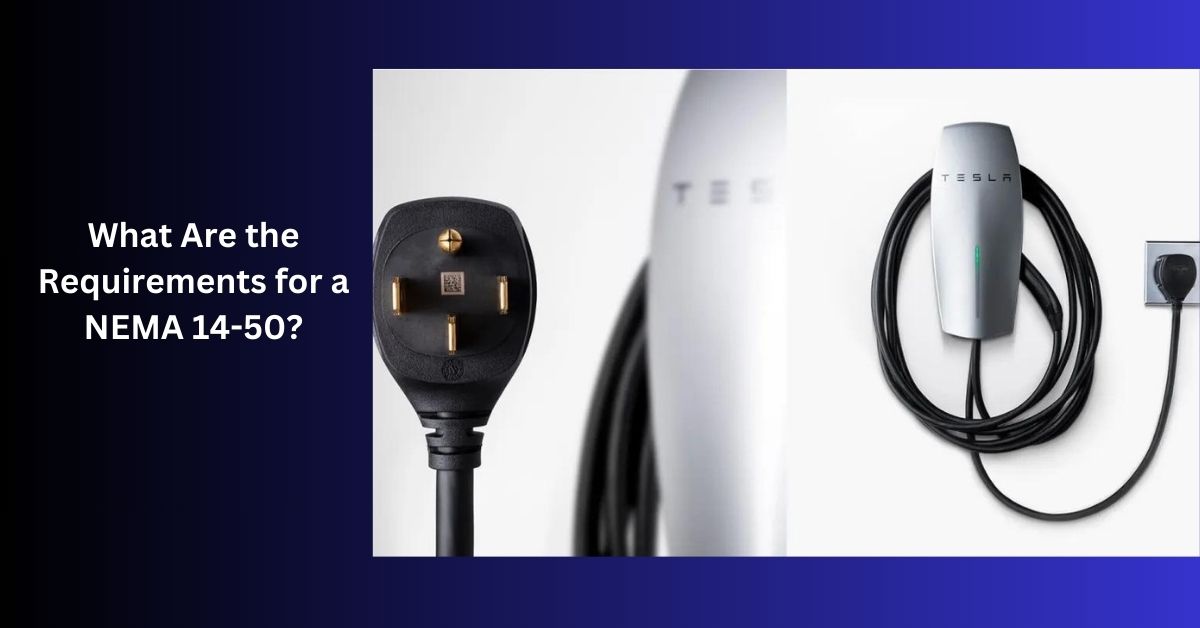
The NEMA 14-50 is a standard electrical plug and receptacle that supplies power to electric vehicles (EVs) and other high-powered appliances.
It uses a 50-amp and 240-volt configuration to provide a maximum power output for these devices. Here are the requirements for installing a 240-volt plug in your home:
Dedicated Circuit
The outlet should be installed on its own electrical circuit to prevent overloading and tripping the breaker. A dedicated circuit enables the power outlet to supply the maximum power without competing with other appliances or devices on the same circuit.
The outlets typically incorporate ceramic or glass insulators that can withstand the demands of extensive charging.
This enables a safe and efficient power supply for your electric vehicle. The plug should be installed at least 12 inches above the floor for easy accessibility and to avoid water splashing or damage.
Adequate Amperage Rating
The electrical wiring should support the amperage rating required by the outlet. A NEMA 14-50 outlet requires a dedicated circuit with an amperage rating of at least 40 amps.
The higher the amperage rating, the more power can be supplied to your electric vehicle. A low amperage rating can cause underpowered charging, which may result in longer charging times.
A professional EV charger installer or electrician can determine if your home’s electrical system can handle the amperage requirements for a 240-volt plug installation.
Correct Wire Gauge
The wire gauge refers to the thickness of the wires in your home’s electrical system, and it plays a role in providing safe and efficient charging.
If the wires are too thin or have a low gauge, they may not be able to handle the electrical load of your EV and can overheat.
Thick wires with a higher gauge can carry higher amounts of electricity without overheating. Choose the correct wire gauge when installing a 240-volt plug to provide safe and efficient charging.
The length of the wires needed for installation plays a significant role in determining the correct wire gauge. Longer distances require thicker wires to handle higher amperage levels.
Professional Installation
Hire a qualified charger installer or electrician to install a 240-volt plug for your EV. These professionals have the skills and knowledge required to install the plug safely.
They have the necessary tools and equipment for the job, making the process more efficient. Professional installation can prevent outlet issues such as overheating, electrical failures, and other safety considerations.
An experienced electrician or installer will know how to handle high-voltage electricity for secure connectivity.
They can also help determine the appropriate wire gauge for your installation, providing optimal performance and safety.
Proper Grounding
The outlet must be properly grounded to protect against electrical shock and potential damage to your EV. Grounding involves connecting an electrical system to the earth, providing a safe path for electricity to flow in case of a fault.
The National Electrical Code specifies that all EV charging outlets must be grounded to a grounding electrode system. This grounding system helps to redirect excess voltage or current away from the outlet.
The grounding wire must be connected to the outlet’s ground terminal using a screw or clamp. A professional electrician or charger installer can offer expert advice on proper grounding techniques that comply with local codes and standards.
Invest in Durable NEMA 14-50 Receptacles
The NEMA 14-50 outlet is popular for EV charging, offering high voltage and current capacity. To properly install this outlet, consider the appropriate wire gauge for optimal performance and safety. Proper grounding helps to protect against electrical shock and potential damage to your vehicle. Contact a professional EV charger installer to learn more about their 240-volt plug installation services.