


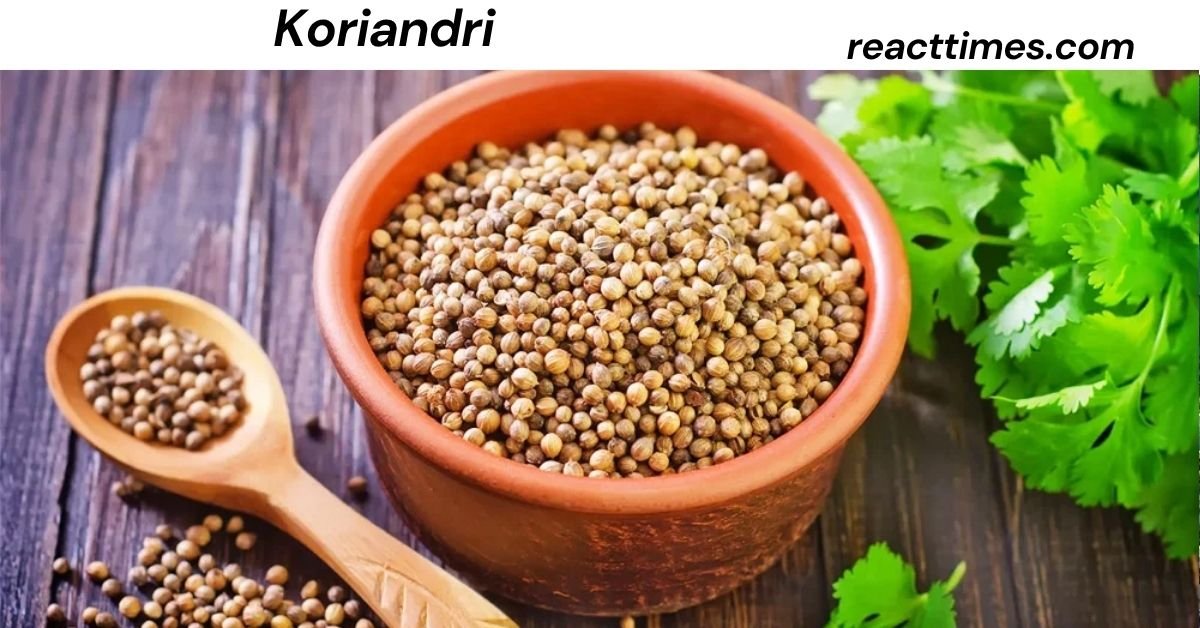
If you searched for “koriandri,” you may be wondering whether it is a special herb, a new food trend, a traditional ingredient, or simply another name for coriander. In most food-related searches, koriandri points to coriander, the aromatic herb scientifically known as Coriandrum sativum.
The word can look unusual to English-speaking readers because plant names change between languages. In Albanian, for example, coriander is commonly written as koriandër, while Korianderi is also found as a form used for the herb. In Estonian, koriander is the main word and koriandri can appear as a grammatical form.
For people in the United States, another important point is the difference between cilantro and coriander. They come from the same plant, but American English normally uses “cilantro” for the fresh green leaves and “coriander” for the dried fruits commonly called coriander seeds.
This guide explains koriandri in simple language. It covers its meaning, botanical identity, history, flavor, nutrition, cooking uses, possible health benefits, safety, growing tips, storage, and common questions. It also separates established facts from health claims that still need more research.
What Is Koriandri?
Koriandri is a term associated with coriander, an aromatic annual herb from the Apiaceae family.
Its scientific name is Coriandrum sativum L. The plant belongs to the same broad botanical family as parsley, carrots, celery, fennel, and several other familiar food plants.
Kew’s Plants of the World Online recognizes Coriandrum sativum as an accepted species. Kew lists its native range from the eastern Mediterranean region to western Pakistan and notes that the plant is now cultivated or introduced in many parts of the world.
The plant is useful because several parts can be used as food.
Fresh leaves are commonly known as cilantro in the United States. The dried fruits are commonly called coriander seeds. Stems can also be used, and coriander roots are used in some cuisines.
This makes koriandri interesting from both a language and food perspective.
What Does Koriandri Mean?
The simplest meaning of koriandri is coriander or a word form connected with coriander.
The exact linguistic meaning depends on the language and context in which the word appears.
For example, English-to-Albanian dictionaries list coriander as koriandër, while other language references use Korianderi for coriander or cilantro.
In Estonian, koriander is the standard word for the plant, while koriandri can occur as a grammatical form of that word. This is one reason an English-language search for “koriandri” can produce different explanations.
Therefore, it is useful not to assume that koriandri describes a completely different plant.
In food searches, the safest interpretation is usually coriander or cilantro, depending on what part of the plant is being discussed.
Is Koriandri the Same as Coriander?
Yes, in most food-related uses.
Koriandri is closely connected with the word coriander and may be used to identify the same plant, Coriandrum sativum.
Also Read: Foxfiny Com: Complete Guide, Website
The difference is often linguistic rather than botanical.
If you see koriandri in a recipe, plant article, or food discussion, look at the surrounding words. If the discussion mentions fresh green leaves, salsa, chutney, garnish, or fresh herbs, it probably means cilantro.
If it mentions seeds, spice blends, curry powder, roasted spices, or ground spice, it probably means coriander seed.
This simple distinction can prevent confusion when following recipes.
Koriandri Scientific Name
The scientific name associated with koriandri is Coriandrum sativum L.
The genus is Coriandrum, and the species is sativum.
Kew classifies the species within the Apiaceae family. The plant is an annual herb and is cultivated widely.
The scientific name is especially useful because common names can vary from one country to another.
For example, the same plant may be called cilantro, coriander, coriander herb, Chinese parsley, or a local-language name. Scientific naming gives researchers, farmers, food companies, and gardeners a more consistent way to identify the plant.
What Does Koriandri Look Like?
Coriander is a small to medium annual herb.
Kew botanical information describes Coriandrum sativum as an erect plant that can commonly reach around 20 to 80 centimeters in height. Its leaves become more finely divided higher on the plant, and its flowers are arranged in umbrella-shaped clusters typical of many plants in the Apiaceae family.
Young plants have soft green leaves.
As the plant matures, it produces small flowers and then develops the fruits commonly called coriander seeds.
The entire plant changes in appearance as it grows, which explains why fresh coriander leaves and dried coriander seeds can look completely different even though they come from the same plant.
Where Does Koriandri Come From?
Coriander has a long history in regions across Europe, North Africa, the Middle East, and Asia.
Modern botanical information places the accepted species’ native range broadly from the eastern Mediterranean to western Pakistan. It is now grown in many countries outside that original range.
Coriander has also become an important ingredient in many culinary traditions.
It is common in South Asian, Middle Eastern, Mediterranean, Latin American, Central Asian, and other cuisines.
In the United States, fresh cilantro is especially common in Mexican, Tex-Mex, Asian, and fusion cooking.
This worldwide use is one reason coriander has so many names.
Why Are There Different Names for Koriandri?
Language is the main reason.
Plants often have different common names in different countries. Sometimes even the same language uses different words for different parts of a plant.
The United States provides a good example.
American English generally uses “cilantro” for fresh leaves and “coriander” for the dried seeds.
British English often uses “coriander” for both the fresh herb and the seeds, although “coriander leaves” may be used when clarity is needed.
Other languages have their own naming systems.
This does not mean that there are multiple species. In ordinary culinary use, these names can refer to different forms or parts of Coriandrum sativum.
Koriandri, Cilantro, and Coriander: What Is the Difference?
The distinction is easy once you focus on the plant part.
Cilantro usually means the fresh leaves and tender stems.
Coriander usually means the dried fruits, commonly called coriander seeds.
Koriandri may be used as a language-specific form or as an alternate online term connected with coriander.
The flavor also changes.
Fresh cilantro has a bright, green, citrus-like flavor. Coriander seeds have a warmer, more earthy and slightly sweet flavor.
This is why a recipe that asks for cilantro cannot normally be replaced with an equal amount of ground coriander seed.
They come from the same plant, but they play very different roles in cooking.
Why Does Cilantro Taste Like Soap to Some People?
One of the most interesting facts about koriandri is that people do not all experience cilantro in the same way.
Some people describe fresh cilantro as fresh, citrusy, or herbal.
Others describe it as soapy.
Genetic differences in smell perception can influence how people experience the compounds found in cilantro. This helps explain why two people can eat the same salsa and have completely different reactions to its flavor.
This is not simply a matter of someone being a “picky eater.”
Human taste and smell are influenced by biology, genetics, previous experiences, and culture.
As a result, dislike of cilantro is perfectly normal.
What Does Koriandri Taste Like?
Fresh koriandri or cilantro usually has a bright and fresh taste.
Many people notice citrus-like, grassy, herbal, or slightly peppery notes.
The flavor is usually strongest when the leaves are fresh.
Coriander seeds have a very different profile.
They are warmer and more rounded, with earthy, mildly sweet, citrus-like, and spicy notes.
Roasting or dry-toasting coriander seeds can make their aroma stronger.
Ground coriander is often softer in flavor than freshly crushed seeds because aromatic compounds can gradually disappear during storage.
For the best flavor, many cooks buy whole coriander seeds and grind them shortly before use.
How Is Koriandri Used in Cooking?
Koriandri is one of the most flexible culinary herbs and spices.
Fresh cilantro can be used in:
- Salsa
- Guacamole
- Tacos
- Soups
- Curries
- Chutneys
- Rice dishes
- Salads
- Noodle dishes
- Bean dishes
- Sauces
- Marinades
- Garnishes
Coriander seeds can be used in:
- Curry spice blends
- Pickles
- Marinades
- Sausages
- Breads
- Roasted vegetables
- Soups
- Stews
- Spice rubs
- Tea and traditional beverages
Coriander is also found in many commercial spice mixtures.
Its ability to work with both savory and aromatic ingredients makes it valuable in many different cuisines.
How to Use Fresh Koriandri
Fresh cilantro is usually best when used near the end of cooking.
Long cooking can reduce some of its fresh aroma.
You can chop the leaves and add them to tacos, rice, soups, curries, salads, beans, or sauces.
The stems are also edible.
Many cooks discard them automatically, but tender cilantro stems contain plenty of flavor and can be chopped into sauces, chutneys, marinades, or cooked dishes.
A useful approach is to separate the leaves from thicker stems.
Tender stems can be chopped finely, while large or tough stems may be better suited to cooking rather than garnishing.
How to Use Coriander Seeds
Coriander seeds are particularly useful when you want a warm spice flavor.
Whole seeds can be added to pickling mixtures, spice blends, and some cooked dishes.
They can also be lightly toasted in a dry pan.
After cooling, the seeds can be crushed or ground.
Freshly ground coriander generally has a stronger aroma than old pre-ground spice.
This is because volatile aromatic compounds slowly change or escape during storage.
For that reason, keeping whole coriander seeds in a sealed container and grinding small amounts when needed can improve flavor.
Koriandri in Mexican and Latin American Food
Fresh cilantro is common in many Mexican and Latin American dishes.
It is often used in salsa, tacos, rice, beans, soups, sauces, and guacamole.
The fresh herb can add contrast to foods that are rich, spicy, salty, or acidic.
For example, lime juice, tomato, chili peppers, onion, and cilantro are a familiar combination in many fresh salsas.
The herb does not need to be the main ingredient.
A small amount can change the aroma of an entire dish.
Koriandri in South Asian Cooking
Coriander is especially important in South Asian food.
Fresh cilantro is used as a garnish and ingredient in chutneys, curries, rice dishes, lentil dishes, and sauces.
Coriander seeds are used whole, crushed, or ground.
Ground coriander is a common component of spice mixtures and can provide body and warmth without adding the intense heat associated with chili peppers.
In many recipes, coriander works together with cumin, turmeric, chili, ginger, garlic, and other spices.
Its flavor helps connect stronger spices into a more balanced mixture.
Koriandri in Middle Eastern Cooking
Coriander is also used in many Middle Eastern food traditions.
The seeds can appear in spice blends, soups, stews, meat preparations, vegetables, and pickles.
Fresh cilantro is used in sauces, salads, soups, and other dishes depending on regional cuisine.
Because the plant works in both fresh and dried forms, it can appear in different stages of a meal.
This versatility is one reason coriander has remained important across generations.
Koriandri Nutrition
Fresh cilantro is generally used in small amounts, so it is not normally a major source of calories or macronutrients in a meal.
However, leafy herbs can contribute micronutrients and plant compounds while adding flavor.
Coriander seeds are more concentrated because they are dried.
Their nutritional composition is different from fresh leaves.
The USDA’s National Agricultural Library provides access to FoodData Central and other food-composition resources for examining nutrient information.
The exact nutritional value depends on whether you are eating fresh leaves, dried seeds, ground coriander, or another coriander product.
This distinction is important when reading nutrition claims online.
A claim about coriander seed should not automatically be applied to fresh cilantro leaves.
Does Koriandri Have Health Benefits?
Coriander contains a range of plant compounds that researchers have studied for possible biological effects.
Scientific reviews describe compounds including linalool, polyphenols, terpenoids, phytosterols, fatty acids, and other phytochemicals.
Laboratory and animal research has reported antioxidant, anti-inflammatory, antimicrobial, glucose-related, lipid-related, and cardiovascular effects.
However, this does not mean that eating cilantro or coriander will prevent or cure a disease.
This distinction is essential.
Research on a plant compound in a laboratory is different from a large, high-quality clinical trial in humans.
Therefore, koriandri is best viewed as a flavorful food that can be part of a healthy eating pattern rather than as a medical treatment.
Koriandri and Antioxidants
Coriander contains compounds with antioxidant activity.
Antioxidants are substances that can help protect cells from oxidative processes.
Research has examined coriander extracts, oils, leaves, and seeds for antioxidant effects. Reviews have identified several phytochemicals that may contribute to these properties.
Still, laboratory antioxidant activity should not be interpreted as proof that eating coriander prevents a particular disease.
The bigger nutritional picture matters more.
Eating a wide variety of vegetables, fruits, legumes, whole grains, nuts, seeds, and herbs provides many different beneficial compounds.
Koriandri can be one small part of that pattern.
Koriandri and Digestion
Coriander has a long history of traditional use for digestive complaints.
Scientific literature has also investigated possible digestive and gastrointestinal effects.
However, traditional use is not the same as clinical proof.
If someone has persistent abdominal pain, vomiting, unexplained weight loss, blood in the stool, or another concerning symptom, adding coriander should not replace medical evaluation.
As a food ingredient, coriander is a simple way to add flavor without relying on large amounts of salt, sugar, or heavy sauces.
That may indirectly support healthier cooking habits.
Koriandri and Blood Sugar Research
Researchers have studied coriander in relation to blood glucose.
Some laboratory, animal, and early human research suggests that coriander compounds may influence glucose metabolism.
A recent randomized controlled trial involving 40 adults with type 2 diabetes examined coriander seed powder supplementation for six weeks and measured several metabolic outcomes.
A study like this can be interesting, but it is not enough to establish coriander as a treatment for diabetes.
The study was small and involved a specific supplement dose and population.
People with diabetes should continue to follow evidence-based treatment and nutrition guidance from their healthcare professionals.
Koriandri and Heart Health Research
Coriander has also been studied for possible cardiovascular effects.
A scientific review found that much of the evidence for cardiovascular benefits came from animal and laboratory studies, with fewer clinical studies in humans.
This is a good example of why careful health communication matters.
A research paper may report promising biological activity without proving that an everyday food can prevent heart disease.
Coriander can certainly be part of a balanced diet.
But it should not be promoted as a replacement for prescribed medicine, blood-pressure treatment, cholesterol management, exercise, or other proven interventions.
Is Koriandri a Medicine?
Koriandri is primarily a food herb and spice.
Coriander has been used in traditional medicine in different cultures, and researchers continue to investigate its chemical compounds and possible biological effects.
That history is important, but it should not be confused with modern clinical evidence.
A traditional remedy can be culturally meaningful without having enough evidence to support a medical claim.
People should be especially cautious with concentrated coriander extracts, essential oils, capsules, or supplements because these products can deliver much higher amounts than ordinary culinary use.
Koriandri Supplements and Extracts
Fresh cilantro and coriander seeds used in normal cooking are different from concentrated supplements.
A supplement may contain a much larger amount of plant compounds.
The scientific evidence for coriander supplements is still developing.
For example, research has investigated coriander seed powder in specific populations, but that does not establish that everyone should take coriander supplements.
If you are considering a concentrated herbal product, discuss it with a qualified healthcare professional, particularly if you take prescription medication or have a medical condition.
Food and supplements should not automatically be treated as equivalent.
Is Koriandri Safe to Eat?
For most people, coriander used as a normal food ingredient is generally considered a common culinary food.
However, “natural” does not automatically mean “risk-free.”
Fresh herbs can carry microorganisms if they become contaminated during growing, harvesting, transportation, processing, or handling.
The FDA has specifically monitored fresh herbs, including cilantro, for foodborne pathogens. In a sampling assignment covering 2017 through 2021, FDA testing detected Salmonella, Cyclospora, and STEC in some samples of fresh basil, cilantro, and parsley.
This does not mean that cilantro is unsafe.
It means that fresh produce should be handled properly.
How to Wash Fresh Koriandri
Before eating fresh cilantro, remove damaged leaves and wash the herb under clean running water.
Do not use soap or household cleaning chemicals on food.
Keep fresh herbs refrigerated when appropriate.
Avoid cross-contamination by keeping unwashed produce away from raw meat, poultry, seafood, and dirty kitchen surfaces.
Clean cutting boards and utensils after preparing raw foods.
These basic steps can reduce the risk of foodborne illness.
Koriandri and Allergies
Some people can have allergies or sensitivities to plants in the Apiaceae family.
Although coriander allergy is not considered common, allergic reactions are possible.
Symptoms of a food allergy can include itching, hives, swelling, vomiting, breathing difficulty, or other reactions.
A person who experiences symptoms after eating coriander should speak with a healthcare professional.
A severe allergic reaction can be an emergency.
Do not assume that a reaction is simply a food intolerance without appropriate evaluation.
Koriandri During Pregnancy and Breastfeeding
Culinary amounts of coriander are different from concentrated herbal products.
If coriander is simply being used as an ingredient in ordinary food, it is not the same exposure as taking concentrated extracts or supplements.
However, evidence around medicinal doses and concentrated coriander products can be limited.
LactMed notes that coriander seeds have been promoted in some mixtures for increasing milk supply, but it also states that scientifically valid clinical trials do not support this use.
Pregnant or breastfeeding people should ask a healthcare professional before using concentrated herbal supplements or essential oils.
How to Store Fresh Koriandri
Fresh cilantro can lose quality quickly.
A simple storage method is to remove damaged leaves, keep the stems hydrated when appropriate, and store the herb in the refrigerator.
Another option is to wrap the herb loosely in a slightly damp paper towel and place it in a suitable container or bag.
The goal is to reduce excessive moisture while preventing the leaves from drying out.
Always remove slimy or visibly spoiled leaves.
How to Store Coriander Seeds
Whole coriander seeds generally store better than ground coriander.
Keep them in an airtight container away from heat, moisture, and direct sunlight.
A cool, dry cupboard is usually suitable.
Ground coriander loses aroma faster because more of its surface area is exposed to air.
If you do not use coriander often, buying whole seeds and grinding small amounts can help preserve flavor.
A simple smell test is useful.
If the spice has almost no aroma when rubbed or crushed, it may have lost much of its flavor.
Can You Grow Koriandri at Home?
Yes.
Coriander is relatively easy to grow under suitable conditions.
It is an annual plant, meaning it completes its life cycle in one growing season.
It generally prefers sunlight and well-drained soil.
One important point is that coriander can bolt quickly when conditions become hot.
Bolting means the plant shifts from producing lots of leaves toward flowering and seed production.
If your goal is fresh cilantro leaves, repeated sowing can help provide a more continuous supply.
If your goal is coriander seeds, allowing the plant to flower and produce mature fruits is useful.
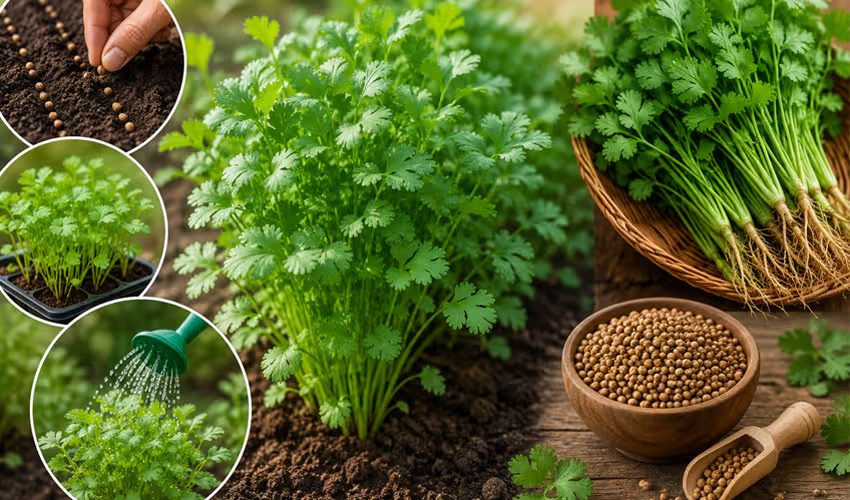
How to Grow Koriandri From Seed
Start with good-quality coriander seed.
Plant it in well-drained soil.
Keep the soil reasonably moist during germination, but avoid keeping it constantly waterlogged.
Once the plants are established, provide suitable sunlight and enough room for healthy growth.
For continuous fresh leaves, plant small amounts at intervals instead of planting everything at once.
This approach can provide new plants as older plants begin to flower.
Gardeners should also remember that coriander roots are sensitive to disturbance, so direct sowing is often easier than repeatedly transplanting young seedlings.
Koriandri Seeds vs. Fresh Leaves
The leaves and seeds deserve separate treatment.
Fresh leaves provide a bright, green flavor.
Seeds provide a warm spice flavor.
Fresh leaves are commonly used as a finishing herb.
Seeds are more often cooked, toasted, ground, or added to spice mixtures.
Even though both come from the same plant, they should not be considered interchangeable ingredients.
Understanding this difference makes recipes much easier to follow.
Koriandri Root: An Often-Overlooked Ingredient
Coriander roots are used in some Southeast Asian cooking traditions.
They can provide a deeper, more concentrated herb flavor.
Roots are often washed carefully and used in pastes, marinades, soups, and sauces.
They are not as common in ordinary American grocery stores as fresh leaves or dried seeds.
If a recipe specifically calls for coriander root, fresh cilantro stems may provide some similar flavor, but they are not an exact replacement.
The difference comes from the plant part and its concentration of aromatic compounds.
Koriandri and Essential Oil
Coriander seed contains volatile oil, with linalool being one of its major components.
Also Read: Bumetro: Online Search Intent, Safety, and What You Should Know
Coriander essential oil has been investigated in scientific research for antimicrobial, antioxidant, insect-related, and other possible applications.
However, essential oil is much more concentrated than culinary coriander.
It should not be treated like a handful of fresh cilantro.
Essential oils can cause irritation or other problems when used incorrectly.
They should not be swallowed casually, and topical use should follow appropriate safety guidance.
Koriandri and Natural Health Claims Online
Search results about koriandri often include strong health claims.
Some articles may describe it as a cure for diabetes, high blood pressure, digestive disorders, infections, anxiety, or other conditions.
Readers should examine these claims carefully.
A 2018 review, for example, described many potentially useful biological effects of Coriandrum sativum but also discussed evidence across different research models.
More recent reviews continue to identify promising pharmacological properties while emphasizing the need for additional research.
The difference between “may have biological activity” and “proven to treat a disease” is extremely important.
Reliable health information should make that distinction clear.
How to Evaluate a Koriandri Health Article
When reading an article about koriandri, ask five simple questions.
First, does the article name the scientific source?
Second, does it distinguish human studies from laboratory or animal studies?
Third, does it provide the amount used in research?
Fourth, does it explain limitations?
Fifth, does it avoid promising a cure?
If an article says that one herb can treat many unrelated diseases without explaining the evidence, be cautious.
Good health information does not need exaggerated promises.
Why Scientific Names Matter for Koriandri
Common names can create confusion.
The word koriandri can have different linguistic meanings or forms.
“Coriander” can refer to the whole plant in some regions but mainly to the seeds in American usage.
“Cilantro” usually means the fresh leaves in the United States.
Scientific naming solves much of this problem.
Coriandrum sativum identifies the plant regardless of whether the discussion is about fresh leaves, seeds, roots, or botanical research.
This is especially useful when reading scientific studies or comparing information from different countries.
Koriandri in the United States
In the United States, consumers are most likely to encounter this plant under the names cilantro and coriander.
Fresh cilantro is sold in grocery stores as a bunch of leafy green herbs.
Coriander seed is commonly sold in the spice section as whole seeds or ground coriander.
The ingredient is widely used in home cooking and restaurants.
Cilantro is particularly common in Mexican and Latin American dishes, while coriander seed appears in South Asian, Middle Eastern, and other international spice traditions.
Its availability has made coriander a familiar ingredient even though the term koriandri itself is less familiar to most American consumers.
How Much Koriandri Should You Eat?
There is no single required amount of fresh cilantro or culinary coriander that everyone needs to eat.
Herbs and spices are normally used to improve flavor rather than to provide a specific daily dose.
Using a reasonable amount in meals is a simple approach.
There is also no strong reason to consume very large quantities simply because online content describes coriander as “healthy.”
More is not always better.
A balanced diet is more important than any single herb.
If you are considering concentrated coriander supplements, follow product instructions and discuss them with a healthcare professional when appropriate.
Is Koriandri Good for Weight Loss?
Koriandri should not be considered a weight-loss treatment.
Fresh herbs are generally low in calories, and using flavorful herbs and spices can make healthy meals more enjoyable.
That may help people build satisfying meals without relying heavily on high-calorie sauces.
But coriander itself does not provide a proven shortcut for losing body fat.
Sustainable weight management depends on overall dietary intake, physical activity, sleep, health conditions, medications, and many other factors.
This is another area where realistic expectations are better than internet promises.
Can Koriandri Detox the Body?
The word “detox” is often used in online food marketing.
The human body already has systems for processing and removing waste, including the liver, kidneys, digestive system, and lungs.
There is not good evidence that drinking coriander water or eating large amounts of coriander “detoxes” the body in the way many social media posts claim.
Coriander can be part of a nutritious diet.
But a healthy diet is different from a special detox program.
Can Koriandri Lower Cholesterol?
Some research has investigated coriander and lipid levels.
Certain animal studies and small human studies have reported potentially favorable effects.
A review of coriander’s cardiovascular research, however, noted that much of the evidence was from preclinical studies, with relatively few clinical studies.
Therefore, it would be inaccurate to tell readers that coriander is a proven cholesterol-lowering treatment.
If cholesterol is high, evidence-based nutrition, physical activity, medical evaluation, and prescribed treatment remain more important than any individual herb.
Can Koriandri Cure Diabetes?
No.
There is not enough evidence to describe coriander as a cure for diabetes.
Research continues to examine whether coriander compounds can influence glucose metabolism.
A recent controlled study investigated coriander seed powder in adults with type 2 diabetes, showing that the topic is being studied in humans.
However, a small clinical trial does not establish a universal treatment.
People with diabetes should never stop prescribed medication because of information found in an online article about koriandri.
Koriandri and Digital Literacy
The unusual spelling of koriandri creates an interesting online search problem.
When a relatively unfamiliar keyword appears on many websites, readers may assume that it represents a newly discovered product or health trend.
That assumption can be wrong.
Search engines can amplify repeated wording.
One website may publish an article, other websites may copy the idea, and the same claim can appear many times.
Repeated information is not automatically stronger evidence.
The best way to evaluate a claim is to look for authoritative botanical, food-safety, nutrition, or medical sources.
Koriandri and Search Intent
People searching for koriandri may have several different intentions.
Some may want a translation.
Others may want to know what plant it represents.
Some may be looking for coriander benefits.
Others may want recipes, growing instructions, nutrition information, or the difference between cilantro and coriander.
Understanding this search intent explains why online results can appear inconsistent.
A good article should address the basic meaning first and then explain the related food and botanical information.
Common Mistakes About Koriandri
One common mistake is assuming koriandri is a completely new plant.
Another is assuming cilantro and coriander seed are exactly the same ingredient.
A third is treating traditional medicinal use as proof of modern medical effectiveness.
A fourth is believing that “natural” products are automatically safe at any dose.
A fifth is trusting health claims simply because many websites repeat them.
Avoiding these mistakes makes it easier to understand coriander realistically.
Also Read: Mila Volovich: The Life, Career, and Legacy of Milla Jovovich
Practical Ways to Add Koriandri to Your Diet
If you enjoy the flavor, there are many simple options.
Add fresh cilantro to tacos.
Mix chopped leaves into salsa.
Use it in bean or lentil dishes.
Add it to rice.
Stir it into soups after cooking.
Blend it into a chutney or sauce.
Use coriander seed in roasted vegetables.
Add ground coriander to homemade spice blends.
Toast whole coriander seeds before grinding them.
Use the herb as a fresh garnish for curries and noodle dishes.
The key is variety.
You do not need a special “koriandri diet.”
You simply need to use the herb in foods you already enjoy.
Koriandri: Fresh or Dried?
Fresh and dried forms serve different purposes.
Fresh cilantro gives a bright finishing flavor.
Dried coriander seed gives warmth and depth.
Ground coriander is convenient but loses aroma faster than whole seeds.
If a recipe calls for fresh cilantro, dried coriander seed is not a direct substitute.
If a recipe calls for coriander seed, fresh cilantro will also create a completely different result.
Understanding the form of the ingredient is one of the most important practical tips for cooking with koriandri.
Frequently Asked Questions About Koriandri
1. Can koriandri be frozen for long-term storage?
Yes. Fresh cilantro can be frozen, although its texture usually changes after thawing. Frozen cilantro is often better for cooked dishes, sauces, soups, and other recipes where fresh texture is less important. If you want a crisp garnish, fresh cilantro is usually the better choice.
2. Does coriander belong to the parsley family?
Yes. Coriander belongs to the Apiaceae family, the same botanical family that includes parsley, carrots, celery, and fennel. This does not mean coriander and parsley are the same plant. They are different species within the same larger plant family.
3. Why does ground coriander sometimes smell weak?
Ground coriander has more surface area exposed to air than whole seeds. Over time, volatile aromatic compounds can decrease, causing the spice to lose its characteristic smell. Storing whole seeds in an airtight container and grinding them shortly before cooking can help preserve aroma.
4. Can children eat koriandri?
Cilantro and culinary coriander can be normal food ingredients for children who tolerate them. The important issue is the child’s overall diet and any known food allergies. Concentrated herbal supplements are a different matter and should not be given to children casually without appropriate professional advice.
5. Can koriandri be used instead of parsley?
Sometimes, but the flavors are different. Cilantro has a stronger and more distinctive aroma, while parsley is generally milder and more grassy. In some recipes the substitution works, but in dishes where parsley is a major flavor, the result may taste very different.
Conclusion
Koriandri is a useful and versatile herb and spice connected with Coriandrum sativum, commonly known as coriander. In the United States, its fresh leaves are usually called cilantro, while its dried fruits are known as coriander seeds. Although the names can be confusing across different languages and regions, they generally refer to different parts of the same plant.
Koriandri has a long history in cooking and is used in many cuisines around the world. Fresh cilantro can add a bright, fresh flavor to salsa, tacos, soups, salads, rice, curries, and sauces, while coriander seeds provide a warm, earthy flavor to spice blends, marinades, stews, and baked foods.
Research has also explored the plant’s natural compounds and possible health effects. However, current evidence does not support treating koriandri as a cure or replacement for medical treatment. It is best viewed as a flavorful food that can be part of a balanced and varied diet.
For the best experience, use fresh cilantro when you want a bright herbal flavor and whole coriander seeds when you want a deeper spice flavor. Store both forms properly, practice good food safety, and be cautious about exaggerated health claims or concentrated supplements.
Overall, koriandri is a simple but valuable ingredient with botanical, culinary, nutritional, and cultural importance. Understanding its different names, plant parts, uses, and limitations can help consumers make informed choices and enjoy this versatile herb safely.